
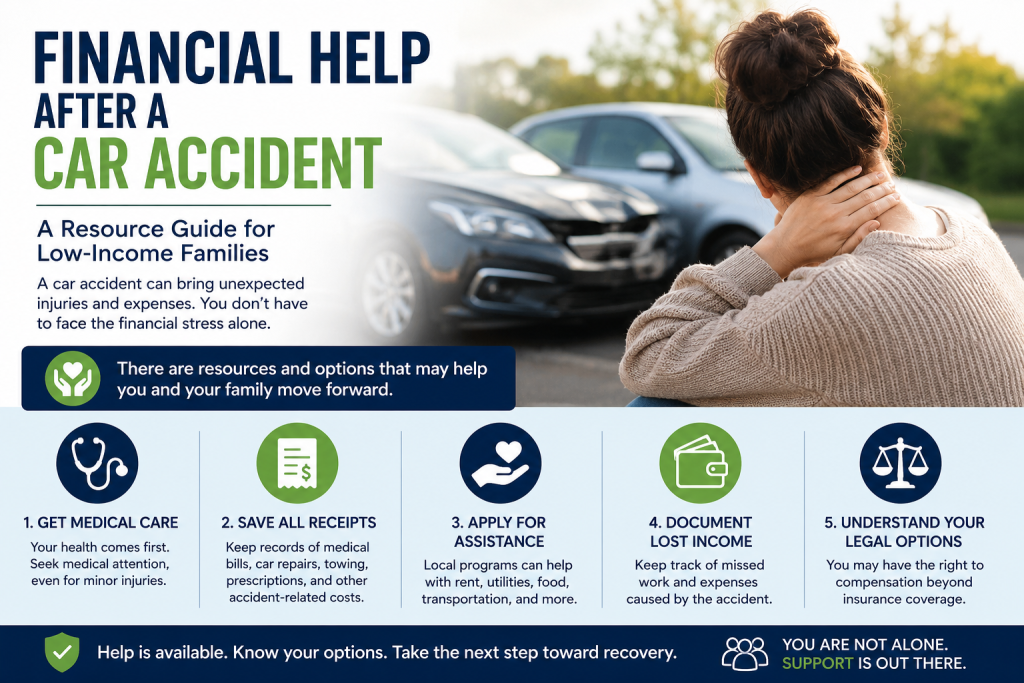
A car accident can create financial problems almost immediately. Even a relatively minor crash can lead to medical bills, missed work, transportation issues, and unexpected expenses. For low-income families, these challenges can quickly become overwhelming.
This guide outlines some of the resources that may help if you’re struggling financially after a car accident.
1. Seek Medical Care Right Away
Even if your injuries seem minor, getting evaluated by a medical professional is important. Some injuries, including concussions, whiplash, and internal injuries, may not show symptoms immediately.
If you do not have health insurance, you may be able to receive care through:
- Community health centers
- Federally Qualified Health Centers (FQHCs)
- Hospital financial assistance programs
- State Medicaid programs if you qualify
Documenting your injuries can also become important if you later need to pursue an insurance claim.
2. Apply for Emergency Financial Assistance
Many communities offer programs designed to help families facing temporary financial hardship.
Depending on your situation, assistance may be available for:
- Rent or mortgage payments
- Utility bills
- Food assistance
- Transportation expenses
- Emergency cash assistance
You can also call 211 or visit your state’s 211 website to locate local programs and nonprofit organizations that may be able to help.
3. Explore Temporary Income Replacement Options
An injury can make it impossible to return to work immediately.
You may qualify for:
- Temporary disability benefits
- Paid sick leave programs
- State disability programs
- Employer-sponsored short-term disability coverage
- Workers’ compensation benefits if the accident happened while working
Even a few weeks without income can place significant stress on a household budget, so applying for assistance as early as possible is important.
4. Keep Records of Every Expense
Save documentation related to your accident, including:
- Medical bills
- Prescription costs
- Car repair estimates
- Towing invoices
- Rental car expenses
- Lost wages
- Transportation expenses to medical appointments
These records may become important when dealing with insurance companies or pursuing compensation for accident-related losses.
5. Understand That Financial Recovery May Extend Beyond Insurance
Many people assume that insurance automatically covers every expense after a crash. Unfortunately, claims can become complicated, especially when injuries are involved.
Depending on the circumstances of your accident, you may have options for recovering compensation related to:
- Medical expenses
- Lost income
- Future treatment costs
- Pain and suffering
- Other accident-related damages
For Pennsylvania residents seeking more information about their rights after a crash, this guide on Bucks County car accidents explains common legal issues and potential options following an accident.
6. Ask for Help Early
Financial stress often becomes worse when families wait too long to seek assistance. Reaching out to community organizations, healthcare providers, government agencies, and legal resources early may help you avoid larger financial problems later.
Final Thoughts
A car accident can disrupt nearly every part of your life, especially when money is already tight. The good news is that resources may be available to help with medical care, housing, food, transportation, and income replacement.
You do not have to navigate financial hardship after an accident alone. Understanding your options and seeking assistance early can make recovery more manageable for you and your family.